June
3
June
3
Lion King Dance Song
May
29
World Bee Day 2024
World Bee Day was on May 20th. We’ve been learning about bees in class and how important they are to our planet!
Turkey Jay is a beekeeper part-time and let us touch and explore the various bee equipment he uses for his many hives.
We looked at a bee smoker, bee wax, a bee suit, bee tool, honeycomb, propolis, a frame from a bee box, and so on.
There is so much to know about these incredible creatures.
What are some questions you might still have?
Do you want to test your knowledge? Let’s play KAHOOT!
-

- Future beekeeper?
-

- honeycomb wax
-
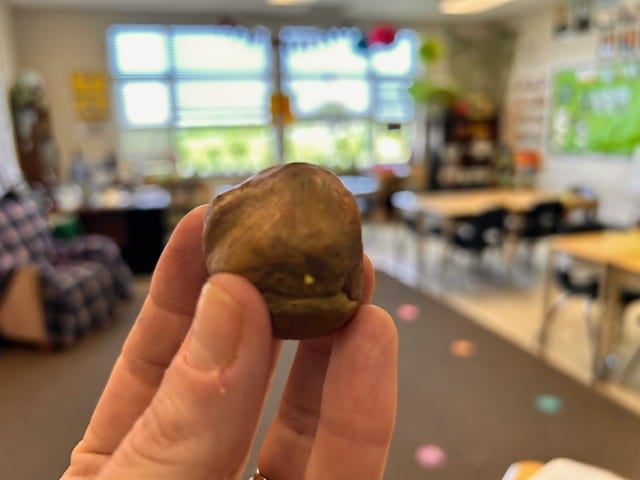
- propolis aka bee glue
May
23
Tyler Waddilove Visits Us
We were excited to invite Mr. Tyler Waddilove in our classroom. He is from the Munsee-Delaware Nation. He came to teach us about many different ways his Indigenous culture uses nature as medicine or in ceremonies.
-
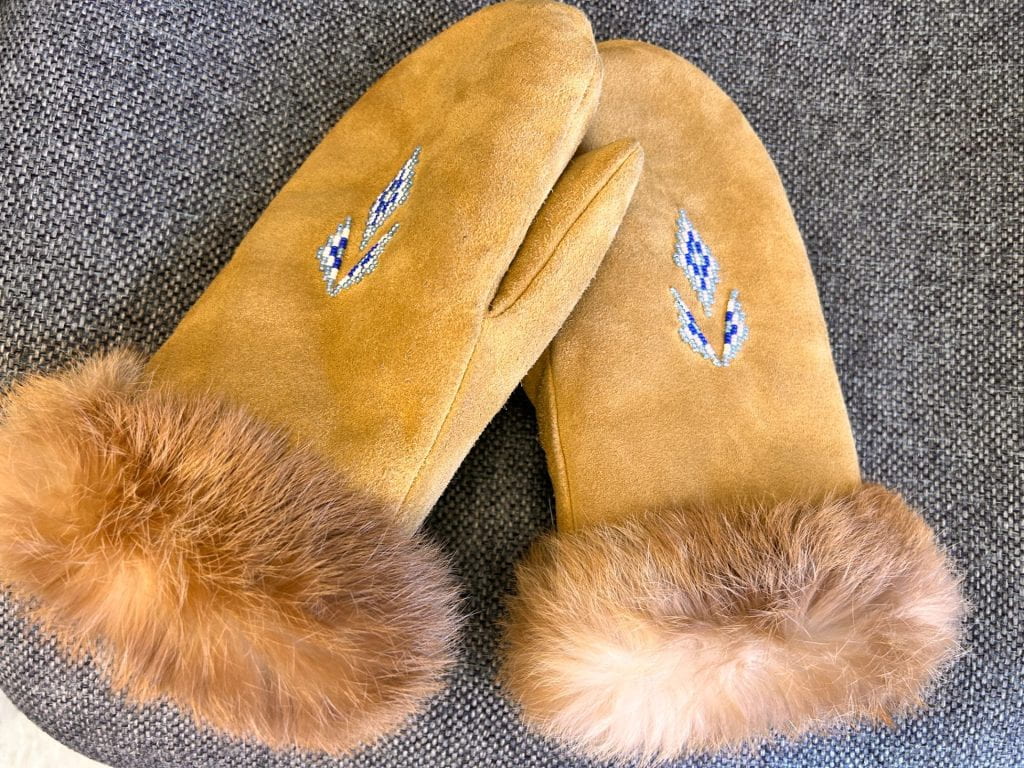
- very warm deer skin mittens with fox fur
-
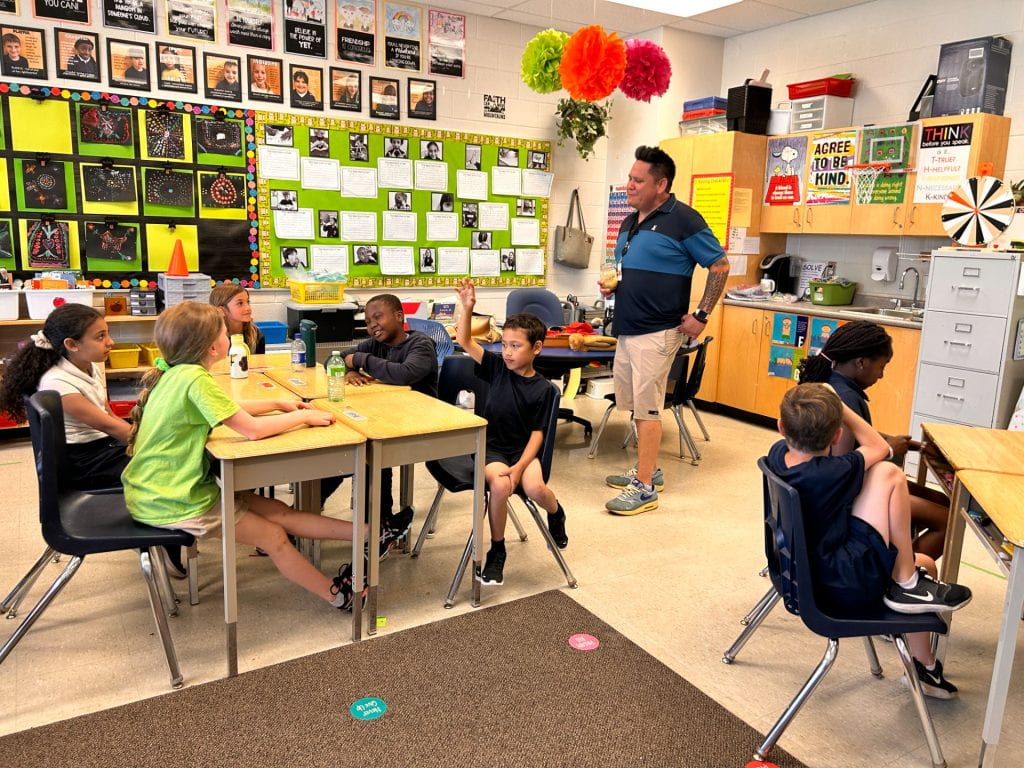
- Tyler teaching us
-
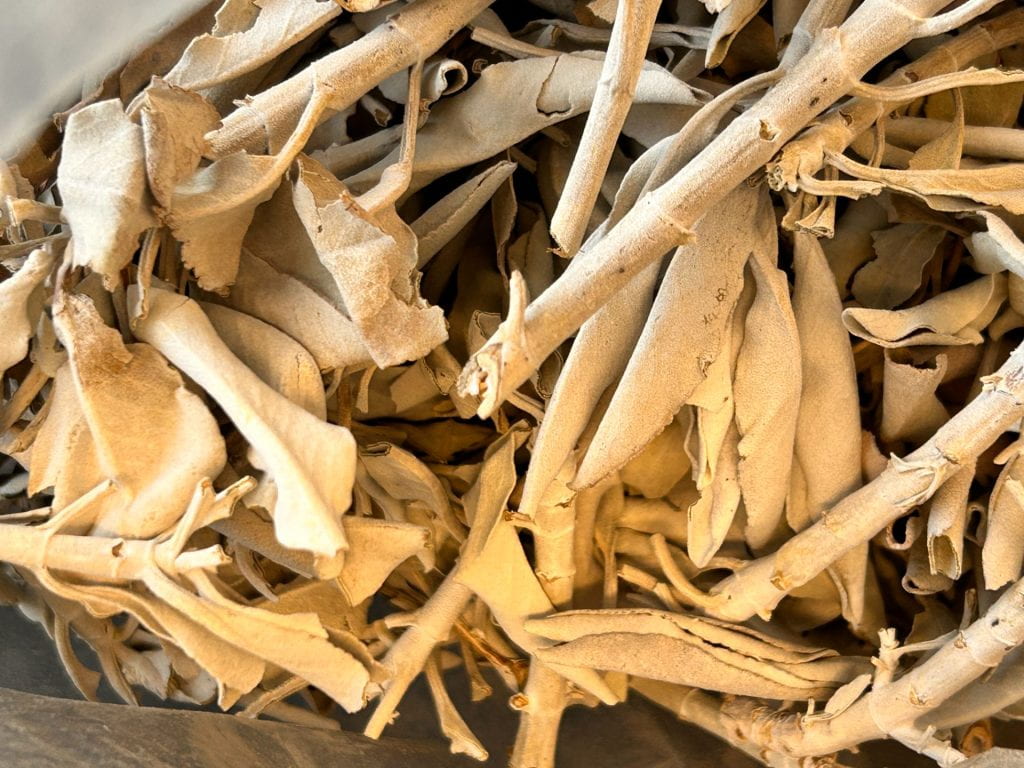
- Buffalo sage from Arizona
-
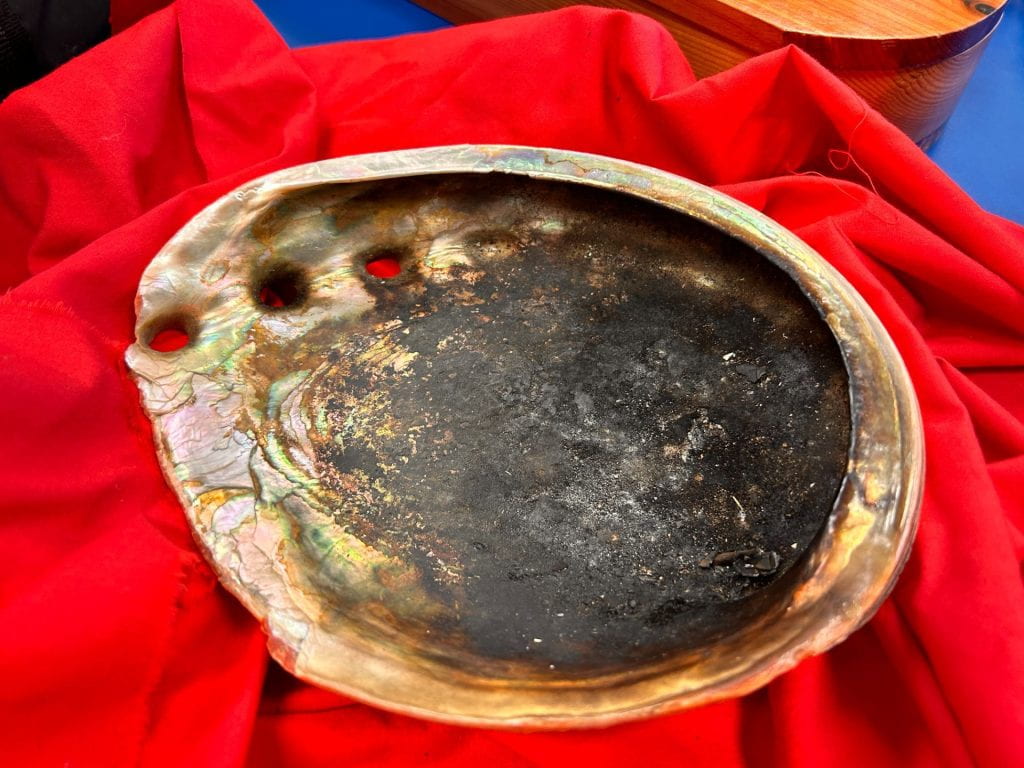
- shell used for smudging ceremony
-
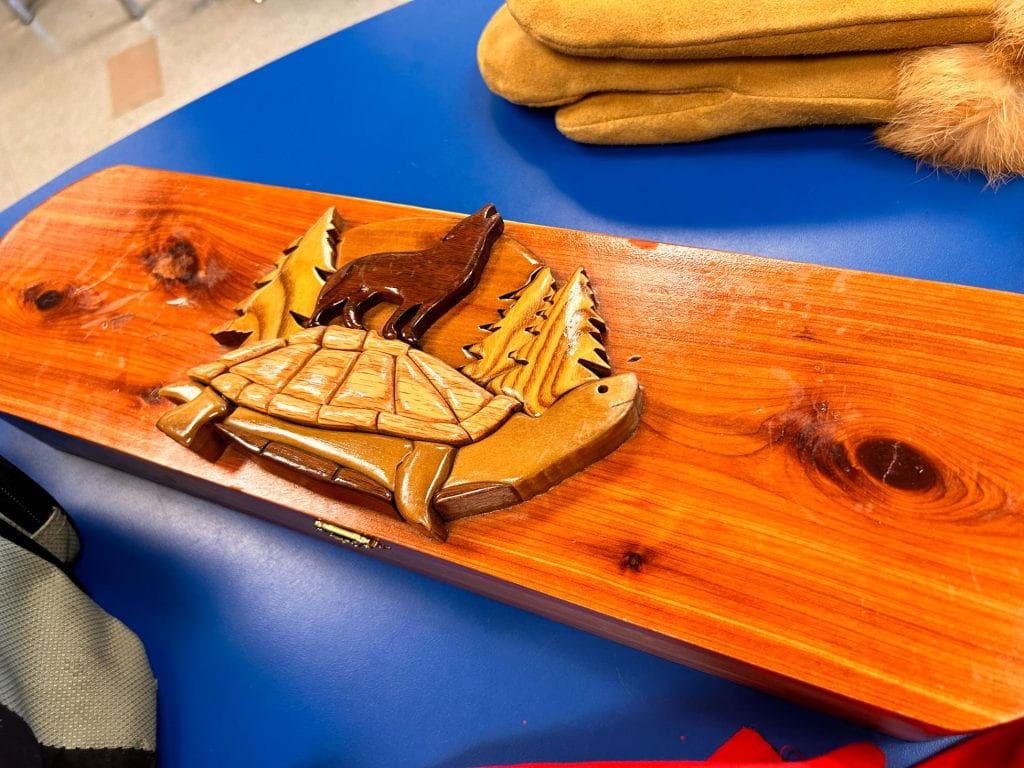
- wooden box containing feathers
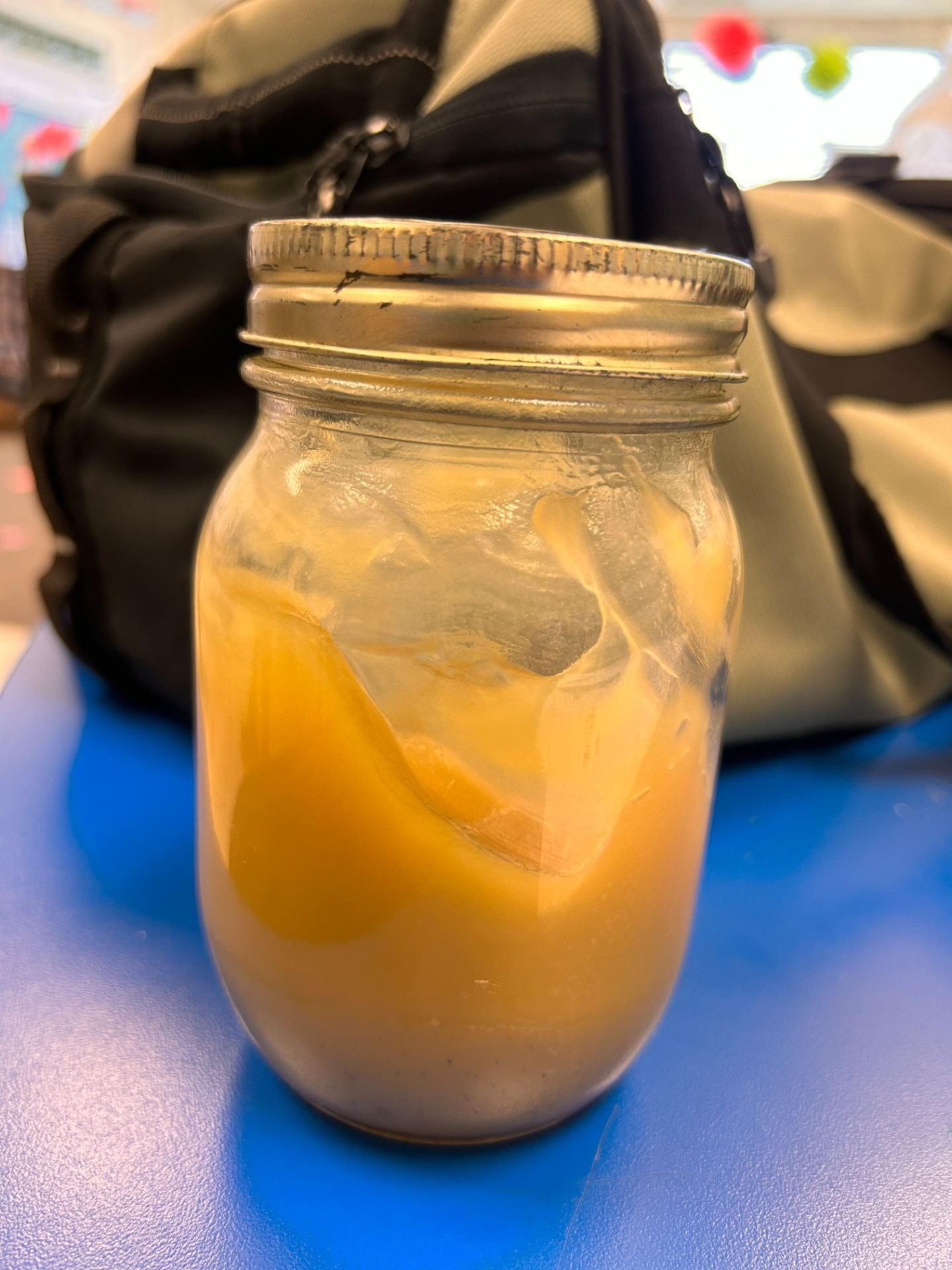
He made our learning very hands-on by bringing in different medicines to show us. He started by showing us a container of Minigan which is bear fat. It is mixed with pine resin and is a healing salve used to treat cuts, scrapes, wounds.
He introduced us to 4 major medicines used during ceremonies.
- Sage (used in smudging)
- Tobacco (used as an offering and held only in the left hand because it’s closer to our heart)
- Sweet grass (often seen braided as it is believed that earth is female)
- Cedar–the most powerful medicine. It is used for making tea, for bathing in.
Tyler showed us male and female eagle feathers that are used in the smudging ceremony. He also showed us the large shell that is used to burn the sage. He demonstrated what smudging looks like by using the feathers to move the smoke around the body. We didn’t want to set off any fire alarms, so he just simulated the smudging.
Tyler explained the creation story and why North America is called “Turtle Island” and how his culture believes that everything is connected. We are one with nature.
Thank you, Tyler, for taking the time to visit us!
May
17
Capacity and Mass…What’s the Difference?
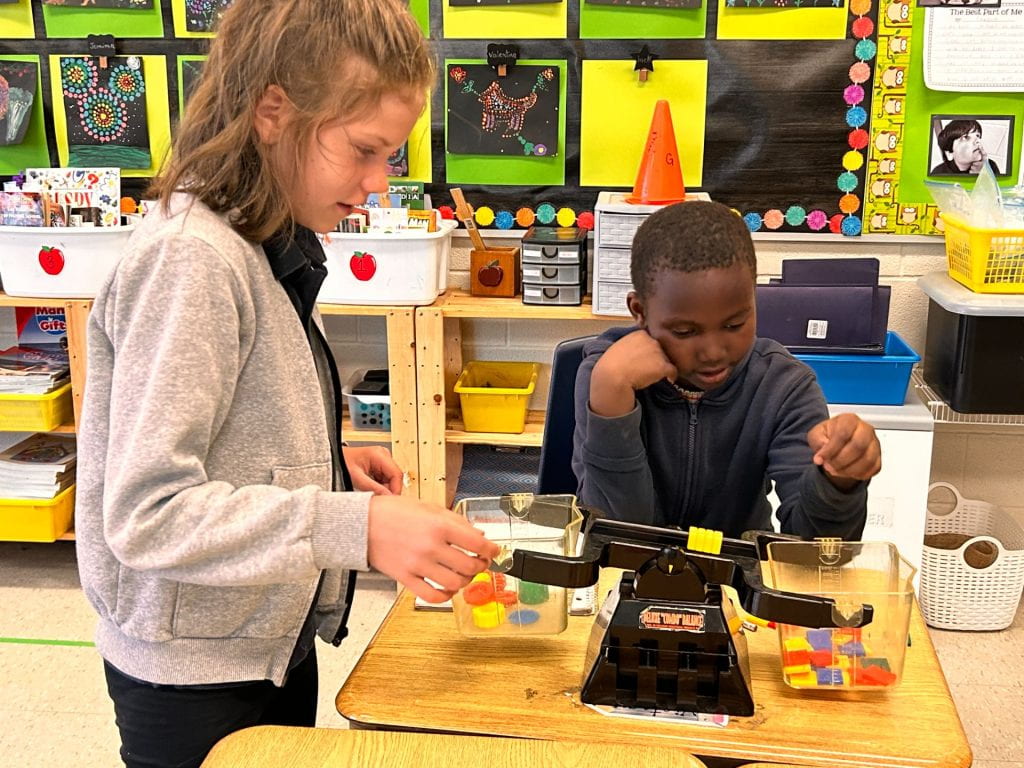
Today we were exploring capacity and mass using lots of hands-on activities.
What is MASS?
- Mass is the amount of matter in an object. We can measure using g or Kg
What is CAPACITY?
We first measured capacity of various sized containers using nonstandard units. In our case, linking cubes. We estimated first, then counted carefully. We were surprised by how much some of our containers could hold!
Next, we sat in a circle and passed around a 1000g weight and a 1 g weight to feel the difference. We know that 1000g is equal to 1 kg. We used pan balances to measure (in grams) the mass of some math tiles.
What are the capacities of some items in your fridge?
What is the mass of items in your pantry?


May
16
Reading is Learning!
We’re always excited for a good read aloud. We are a class of readers who savour time reading and being read to. Recently, Mrs. Woods came to read to us multiple books including the classic Where the Wild Things Are by Maurice Sendak. We all enjoyed the books and many of which we’d never read before! Thank you Mrs. Woods!
-

- read aloud
-

- Press the button

spin the wheel!
The primary division was involved in an event called the Great Book Exchange. This is where students bring in gently used books in exchange for “new” books! The more books you bring in, the more you can exchange. It was a fun time for everyone. No one left empty handed and hopefully there were some delicious books to engage with and take home to enjoy.


Our unit in division made way for learning about fractions. Recently, we played the game Fractioningo!


On Wednesday, we had another Mystery Reader join us in our classroom…Mrs. Fraumeni! We are so blessed to have wonderful readers share in the love of reading. She read a book to us called The Three Billy Goats Gruff by Mac Barnett. Mrs. Fraumeni began by engaging us with some drama, setting the stage for the story. Throughout the story being read to us, we joined in by making some sound effects of the 3 different billy goats crossing the bridge. What fun! Thank you for reading to us.

May
16
Metis Dot Art
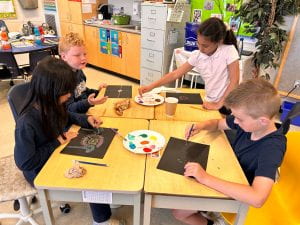
We recently had the privilege of having Metis dot artist, Ms. Kaitlyn Anderson-Mitchell, in our class. She shared with us what makes her Metis, a little bit about her culture, and how Metis dot art is supposed to resemble bead work. Usually flowers, birds, or other natural elements provide the inspiration for this type of art.
We learned that the art usually begins in the centre, and the artist works outward. Dots can be different sizes and the art is usually quite colourful! Having a plan before you begin is a good idea and it takes some patience and practice to strengthen your skills.
We enjoyed our lesson and getting to meet a Metis artist. What a treat!
Great work, Grade 3s!




May
6
3D Robots
The Wild Robot by Peter Brown was a wild success as our latest read aloud. We loved the main character, Roz, who was a robot who learned to love, care for others, and adapt to her environment. We were always excited to read each chapter to see what would happen next. The characters were funny, charming, adorable, and likeable. As a culminating task, we created our own versions of robots using 3D materials that would have ended up in the garbage or recycling bins.
We were asked to give our robots names and describe what our robot can do. We also invited Mrs. Potts’ class to come and have a look at our creations and share what features our robots had.
Have a peek!
Did you know The Wild Robot is coming to movie theatres this Fall?
Check it out!
May
6
Trip to Fanshawe Conservation Area
Last week, we went on a trip out to Fanshawe Conservation area to kick-start our upcoming Plants and Soils science unit. The weather cooperated nicely and we learned a lot of information through fun activities.
We rotated through 3 stations during our visit.

First, we played some interactive games about how plants absorb water and nutrients through their root systems into the stems and then into the leaves. The larger the plant, the longer it will take and the more water and nutrients it will need.


Next, we learned about how to use a flow chart to figure out what type of coniferous tree we were looking at. We needed to inspect the tree carefully. Were the needles individual or in bunches? Were there pinecones, and if so, how long were they?


Finally, we went into the forest and played a game which taught us about the enemies of the forest such as fire, disease, drought, insects, human impact, and so on. We learned how quickly these things can spread and how they can impact different ages and types of trees.
What was your favourite activity and why?


April
17
Writing Poetry: Using an Image as Inspiration
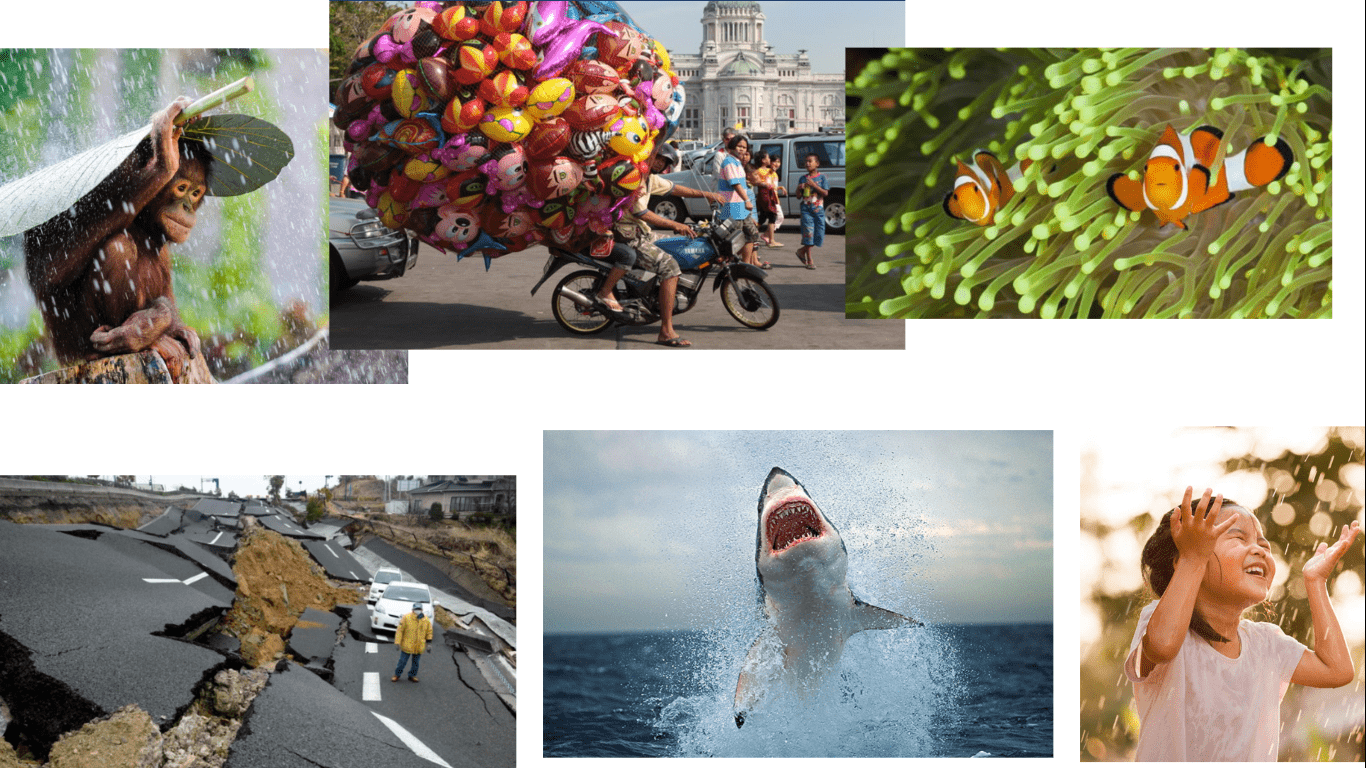
Pictures are worth a thousands words…as the saying goes. Lately, we’ve been looking at images to spark ideas, questions, thoughts, emotions. In class, we’ve brainstormed ideas and words that come to mind regarding certain pictures.
Look at this poem we wrote together about a shark…

Jumping
Leaping
Exploding
Screaming teeth
Rocketing out
Thrashing fins
Black-tipped
Enormous body
Powerful, strong
Apex predator
Students have been asked to select a picture we showed in class or to find their own and write a poem about it. We are encouraged to use some of the strategies and techniques learned in class to make our poems come to life!