June
22


May
1
Launching into Poetry
Launching a unit in poetry means that we need to immerse ourselves in poems of course! Lots and lots of poems–not only written by famous poets like Shel Silverstein, T.S. Eliot, Naomi Shihab Nye, Dennis Lee, and Sheree Fitch, but also poems written by my past students. So not only are we reading poetry, but we will be writing poetry too.
Our focus in this unit is on writing non-rhyming poems (free-verse poetry) and really learning how to use language to bring life to our thoughts and look at the world in different ways. I really love for students to learn to write free-verse poems because there are no rules and it gives permission to the students to think outside the box rather than conform to a certain structure. It really allows them to think freely and not have to worry about rhyming words so much.

So, what is poetry anyway? Some might say poetry is powerful words and that poems are hiding everywhere. Others may say poetry helps us tell a story, express our feelings, helps us heal.
Poems can be silly, nonsensical, sad, joyful, sorrowful, bright, confusing, thought-provoking, simple, complex, and so much more.
What’s the difference between poetry and prose?
Prose…
- ideas and sentences make sense
- organized into sentences, paragraphs
- uses rules (e.g., grammar, punctuation, capitals, spelling)
- uses everyday speech
Poetry…
- can be nonsensical
- has stanzas and deliberate line breaks
- doesn’t have to follow rules
- can have rhythm and flow
- words are chosen carefully and are precise (e.g. metaphors)
April
30
Great Ontario Mail Race
And they’re off! We’ve mailed our letters today which are being sent to various grade 3 classrooms across Ontario. It’s very exciting because whomever receives a letter back first…is the winner!
This experience is great for many reasons because it allows us some good practice in letter-writing and in how to address an envelope. Secondly, we are learning about various communities across Ontario, where they are on a map, and what does their community and school look like?
In our letters, we told a few things about ourselves, we told a few things about our school, and finally a few things about London, Ontario.
Let’s see who gets a response first! I wonder who it will be!


January
11
Our First Week Back
We started the school year with a few fun Minute to Win It games and chatted about our holidays during our morning meeting. It was so nice to see everyone once again, ready to learn. Welcome back!



We understand the importance of knowing our math facts and so we continue to practice this skill using a deck of cards. We make 2 piles. If we don’t know a fact in 3 seconds or less, we put it in the “I don’t know this yet” pile. It’s a good idea to keep practicing our math facts at home, too. Even just 5 minutes per day!


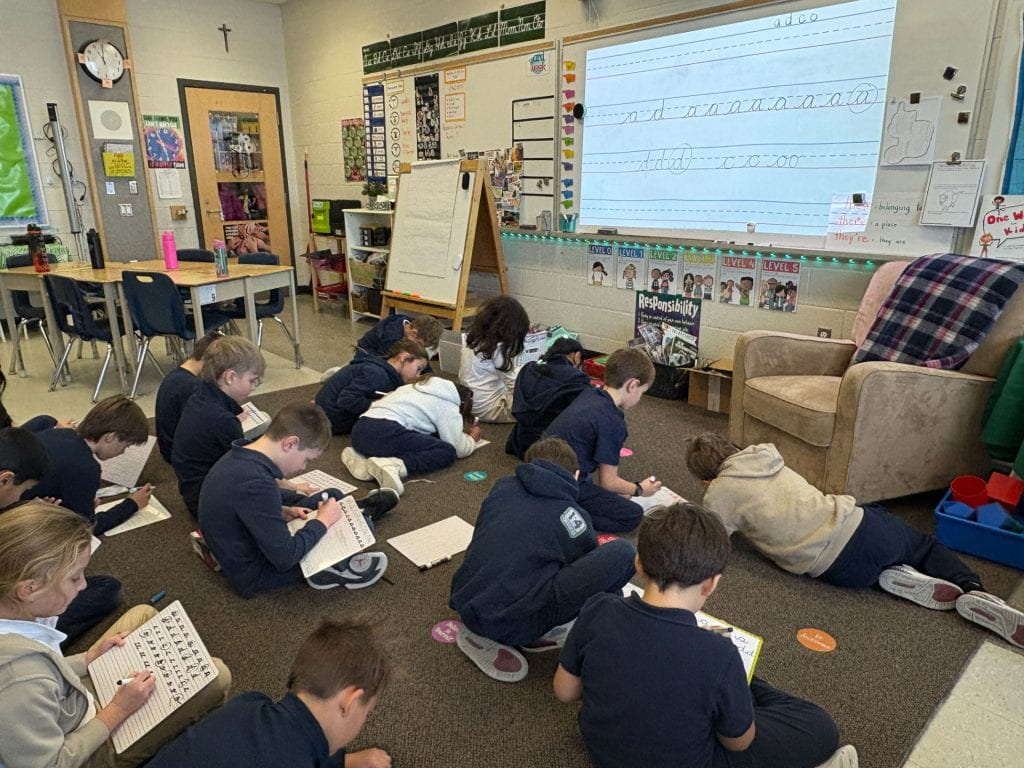
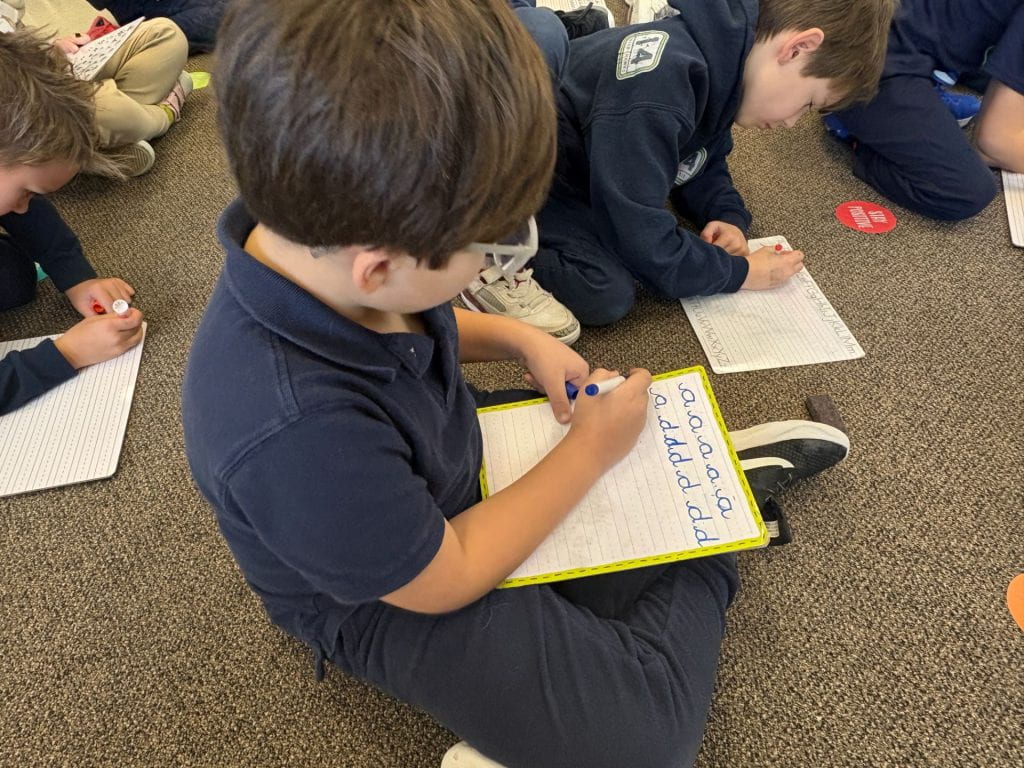
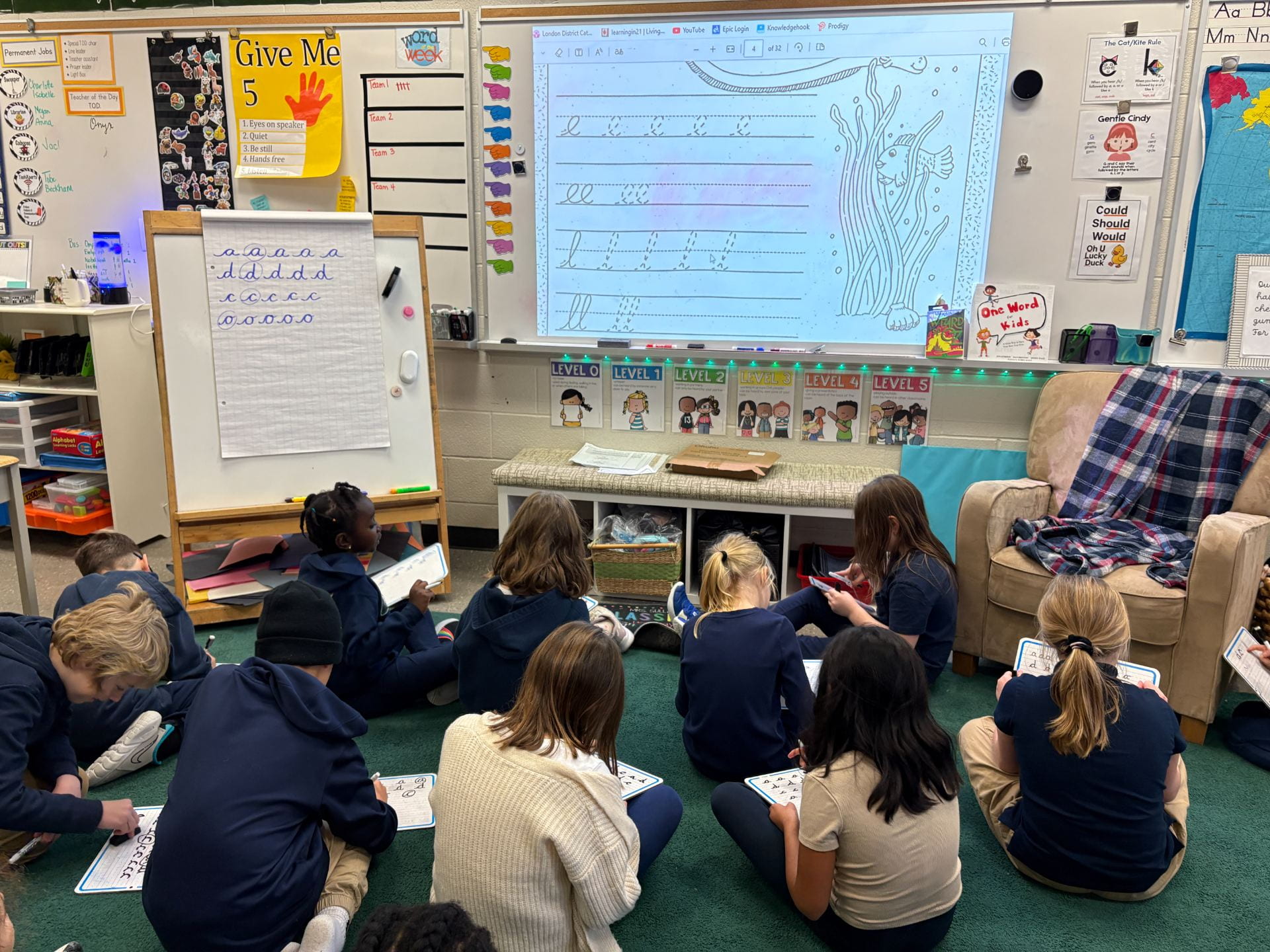
January is an exciting time in our classroom, as it marks the introduction of cursive writing with Mrs. Sullivan. Each student received a practice book to apply and reinforce their learning. We begin each lesson together on the carpet, using our whiteboards to practice forming new letters. Every morning, we also read a cursive morning message to strengthen our recognition skills. Grade 3 is when we begin formally learning to write in cursive, and so far we have learned the letters a, c, d, o, e, and l.
Can you spell load, lace, decal, deal, and ace?

November
23
Our Personal Narratives
Our personal narratives are complete and boy are we proud! The students have worked through the entire writing process from generating ideas to drafting, to writing, editing, publishing.
A personal narrative is a true story about yourself.
We had stories written about:
- a Harry Potter ride
- planting lemon seeds with Dad
- getting lost at Walmart
- Getting trapped in the bathroom stall
- building sandcastles at the beach


We enjoyed reading each other’s stories and leaving some compliments as well. We visited Mrs. Potts’ class and shared our stories with them. Finally, we finished off with an author’s celebration with a few treats to enjoy.


Great job, Grade 3s! I’m so impressed and enjoyed guiding you on the writing process. Bravo!
November
13
We Remember
 November 11 is a special day where we remember and honour the men and women who have served and sacrificed in wars both in the past and present.
War is an ugly thing. It is difficult to explain to children why humans fight in war. How does it all begin? How does it end and why does it continue even now?
A few years ago, Turkey Jay and I traveled to France and visited Normandy. We walked several of the beaches so famous from D-Day including Juno and Omaha beach where so many brave men met their fate. Even to this day, items from the war continue to wash ashore from WW2. We visited the Canadian and American cemeteries and paid our respects to the fallen soldiers.
We learned a little bit about D-Day and how Canadians were involved in coming to France, landing on Juno Beach to help fight the Nazis in occupied France.

What is D-Day?
D-Day was the Allied invasion of Normandy, France, on June 6, 1944, during World War II, which marked the start of the campaign to liberate Nazi-occupied Western Europe. It was the largest seaborne invasion in history and involved a massive combined air, sea, and land assault on five beaches: Utah, Omaha, Gold, Juno, and Sword.
-

- map of the beaches where Americans, Canadians, and Brits landed
-

- Mrs. S on Juno beach

This past week, we’ve been spending quality time using literature to help guide us through what Remembrance Day truly means. We enjoyed reading a gorgeous book called A Bear in War by Harry Endrulat and Stephanie Innes. It is told from the perspective of a teddy bear that belongs to a little girl named Aileen. Her dad goes off to war and she ends up mailing him the teddy bear to keep him company and remind him of home.
There are wonderful illustrations mixed with photographs of real life items as this is a true Canadian story! Students are always amazed that you can actually visit the real teddy bear at the National War Museum in Ottawa! Who wants to go?

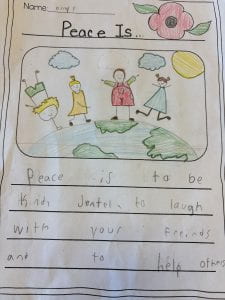
We also read a very colourful book called The Peace Book by Todd Parr. In simple ways, it shares different ways that we can think about what peace is. We then brainstormed some of our own thoughts about what peace means and created our own class book.
We were also busy this week preparing for our Remembrance Day assembly in our school gym along side Ms. Myers’ class. Way to go, Grade 3s! You were so wonderful.
Have a look at some of our messages about peace. Enjoy!




June
23
Poetry Books Have Arrived!
It was exciting to be able to pass out all the poetry books to the young poets in our class.
What a wonderful treat as a teacher to see their genuine pride and excitement in seeing their work published, shiny, and ready to share with others.
Amazing work, Grade 3s. You should be so proud of yourselves.

June
23
Cursive Writing Graduation
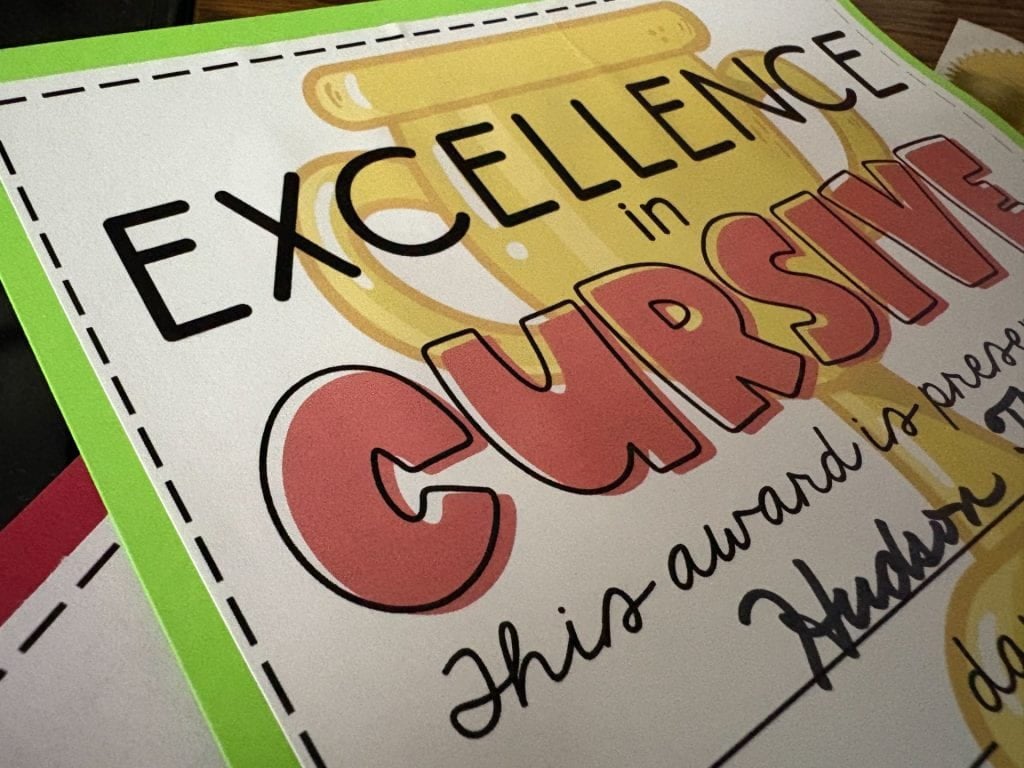
We have finally wrapped up all our lessons on cursive writing. I am so impressed with everyone’s efforts. They have come so far since we started in January.
To receive their certificate, students must have completed their cursive notebook and write a brief letter, in cursive, signed with their name.
A job well done!

May
13
EQAO Class Practice
Grade 3s,
We will practice questions in both math and language in class.
We will do this in class together. Click here.
January
19
Cursive Writing
Cursive writing is in full swing. During the week, we gather on the carpet to listen and observe how to write various letters in cursive. We have been given cursive writing books to help us practice and apply our learning from class.
So far we have learned the letters a, d, c, o, e, l, i, t, u, w
Great work, Grade 3s!
Parents: Do you remember learning cursive? What grade were you in?